Sterility testing is a critical part of product release, but the amount of time needed to complete the test may pose challenges for products with short shelf lives or urgent clinical needs. Traditional sterility testing under United States Pharmacopeia (USP) Chapter <71> requires at least 14 days of incubation, during which samples are monitored for microbial growth. To support products with varying shelf lives and release timelines, QualTex Laboratories now offers validated five- and seven-day rapid sterility testing options alongside a 14-day option.
Choosing the right sterility test means understanding how each option fits a customer’s product testing requirements and release timeline. Katie Quinn, Senior Manager of the Microbiology Laboratory at QualTex Laboratories, explains what to consider and how QualTex helps clients evaluate their options.
When can rapid sterility testing make a difference?
Consider a therapeutic with a 10-day shelf life: standard 14-day testing renders traditional lot release impossible before the product expires. For cell therapy developers, timing is especially critical because manufacturing, quality release, and patient infusion schedules must move in lockstep. Therefore, rapid sterility testing delivers critical value when product shelf lives are narrow, and clinical timelines leave no room for delay. By delivering definitive results days ahead of the standard 14-day compendial assay, rapid methods allow quality teams to make batch release decisions sooner, thereby preserving usable shelf life and maximizing flexibility for clinical administration.
QualTex cuts the timeline without sacrificing detection
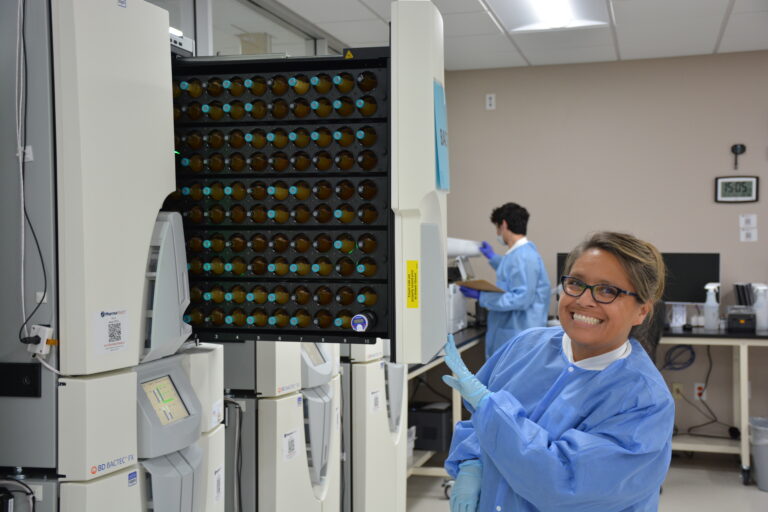
The QualTex microbiology laboratory in San Antonio (ISO/IEC 17025:2017 accredited) utilizes the automated BD BACTEC™ Blood Culture System across its five-, seven-, and 14-day sterility testing options. While traditional compendial testing relies on technicians to visually inspect cultures for turbidity, the BACTEC™ platform continuously measures microbial metabolic activity throughout incubation to deliver objective, automated detection the moment growth occurs. By leveraging these validated rapid methods, this technology significantly compresses incubation periods while upholding the same rigorous standard as traditional assays: reliable contamination detection. To ensure complete method suitability before testing begins, QualTex performs a product-specific Bacteriostasis and Fungistasis (B&F) study, verifying that the drug substance or biologic matrix will not inhibit microbial recovery or mask detection.

Aligning sterility testing with your release goals
Quinn emphasizes that selecting the right testing platform requires evaluating both the product biological stability window and the real-world clinical timeline, and choosing between five-, seven-, and 14-day sterility testing starts with understanding your product requirements and how the testing timelines fit into your overall release plan. For some products, shorter incubation periods can provide valuable time for release and distribution planning. For others, a 14-day option may fit the manufacturing schedule just as effectively.
QualTex helps clients navigate these decisions by evaluating which testing methods are suitable for their product, discussing expected turnaround times, and coordinating sample submission. Once testing is underway, clients can track preliminary status updates and receive notifications when results are available through the QualTex microbiology portal, giving them greater visibility as they plan for product release.
To discuss which sterility testing option best fits your product, contact us at qtx_sales@qualtexlabs.org