Blueprint for Breakthroughs is a LinkedIn newsletter published by Adrienne B. Mendoza, MHA, SVP BioBridge Global and Chief Operating Officer (COO), BBG Advanced Therapies
Originally published on LinkedIn on April 7, 2026
Co-authored by Adrienne B. Mendoza, MHA & Heather Munoz, MN, RN, CPN, CPHON, QIA
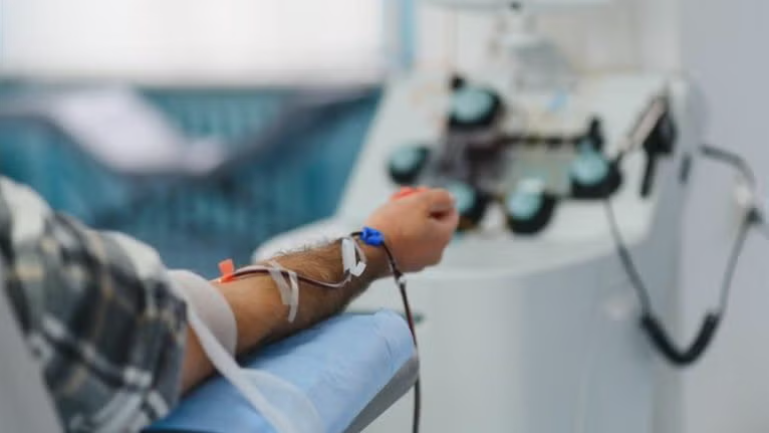
There is one question that dictates whether your cell and gene therapy trials are market access progresses or stalls — and it’s buried in the apheresis schedule. It rarely makes it into a protocol or a site feasibility survey, but it shapes trial timelines and patient outcomes:
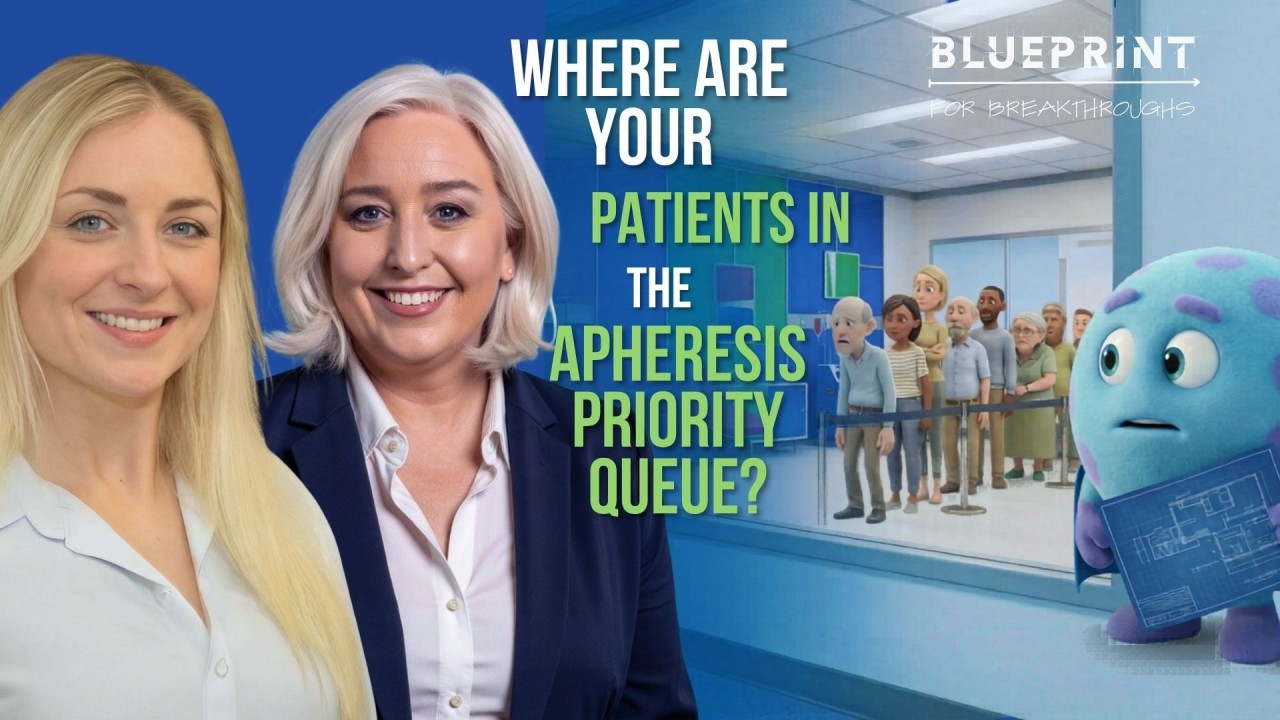
“Where does your patient fall in the apheresis priority queue?”
If you’ve never asked it, you’re not alone. But in a world of finite chairs, staff, and machines, that blind spot can cost patients their place — and sometimes their chance — at life‑saving therapy.
The Queue You Don’t See
While every Clinical site apheresis center is different, schedules are often shaped by clinical urgency and internal programs – which can make consistent access for external cell and gene therapy trials more challenging, and the prioritization queue likely looks like follows:
- Therapeutic and emergent apheresis
- PBSC collections
- Commercial CAR‑T / T-Reg / NK
- Institutional clinical trials
- Outside clinical trials
It’s rational triage: emergent procedures and time‑sensitive transplants come first, followed by commercial therapies with payer approvals and institutional commitments.
Where it gets challenging is what often has less predictable access and what lands at the bottom of the list: external trials — the very studies meant to bring the next generation of treatments to patients.
When capacity tightens, those “last in line” trials are where delays accumulate.
When Waiting Becomes the Risk Factor
For cell therapies, time is not a neutral variable.
Shorter vein‑to‑vein time drives better response and survival. Delays increase disease progression – and patients fall out and some tragically pass away before infusion.
And the delays starts before manufacturing — they start at a point when a patient is ready, but the apheresis schedule isn’t.
At some centers, patients may wait weeks or months for a collection, with a meaningful fraction of patients never making it to leukapheresis at all.
Clinical trial participants, often sitting below commercial products in the priority order, experience those pressures even more acutely.
Why External Trials Slide to the Bottom
This is about how the system is designed: commercial therapies and institutional programs are integrated into the center’s workflows, contracts, and operational priorities.
They have defined pathways, internal champions, and established urgency.
External trials often do not. They introduce new collection parameters, added operational complexity, and limited integration into existing workflows.
So when schedules tighten – those programs slip. And the consequences aren’t just delay – it’s a downstream risk:
- Inconsistent collection timing -> create variability in starting material -> reduced manufacturing success and potency.
- Downstream variability in trial outcomes and compromised data integrity
Yet this entire risk layer is still mostly absent from clinical study protocol design – where it should be addressed first.
A Question That Belongs in Trial Design
What’s striking is not that a hierarchy exists — it’s that sponsors rarely surface it early.
They ask whether a site has the right equipment, accreditation, and staff. They outline collection criteria and manufacturing specs. But they almost never ask the questions that determine access:
- How many apheresis procedures do you perform annually – and what proportion are therapeutic, PBSC, CAR-T, research?
- Where does this external cell and gene therapy trial fall in your priority queue when capacity is tight?
- How often are are collections delayed due to competing priorities?
- What is your referral pathway, who controls access, and what is your regional coverage and surge capacity plan?If these questions aren’t asked upfront, by the time the answers emerge, timelines are already slipping, bridging therapy is stretching, and patients are aging out of eligibility.
Those are scientific risks, not administrative inconveniences.
Because capacity is not theoretical – it is already allocated.
A multi-institutional survey of U.S. academic apheresis programs shows activity is dominated by therapeutic and stem cell collections — highlighting the competing demand your trial enters from day one (Mendoza et al., 2024).
That’s the queue your trial is stepping into.
Rethinking Where Collection Happens
The solution isn’t to push emergent apheresis or transplant patients aside, and it isn’t realistic to expect academic centers to endlessly expand capacity inside the same walls.
The constraint isn’t capability – its access – inside a system that wasn’t built to scale.
And that constraint is becoming more visible as cell therapy moves beyond hematologic malignancies.
In Glioblastoma (GBM) [an aggressive, fast-growing Grade 4 brain tumor arising from glial cells (astrocytes), acting as the most common malignant adult brain tumor] – and increasingly across solid tumors and autoimmune disease – care operates in a hub-and-spoke model, funneled into a handful of geographically concentrated academic centers – Boston, New York, others, an existing infrastructure that is already heavily utilized. If you’re not in those pockets, you’re routed in.
That’s where the friction starts.
Patients travel. Schedules overfill. Collections get pushed – some developers are seeing 2-3 collections deprioritized per month.
From a manufacturing slot perspective, that’s a breaking point.
This is a different dynamic than hematologic conditions, where patient populations are more distributed, and community access is viable.
The disconnect: patients are managed locally – but apheresis is centralized. And as demand grows, that gap only widens.
The more durable answer is architectural: expand collection capacity by moving it closer to where patients live — and partially outside the hospital queue.
Blood centers and mobile leukapheresis platforms are built for exactly this:
- Overflow and surge capacity when hospital-based programs are saturated
- Primary collection sites for clinical trial participants and donor‑based programs
- Alternative access in referral-constrained regionsOn‑ramps for underserved populations who may never reach an academic center
The result is not just more chairs — it’s a more resilient access architecture to meet the scale of what’s coming
The Trials That Will Win
In the next few years, the cell and gene therapy trials that succeed will not be defined solely by their science. They will be defined by how seriously they treat collection strategy and patient access.
Every trial is entering a system where capacity is allocated, prioritization is set, and demand is rising.
Sponsors who:
- Map where their trial will fall in each site’s real‑world queue
- Build in partnerships with blood centers and mobile collection teams
- Plan for surge and harmonized collection
- …will move faster, lose fewer patients to delay, and generate cleaner data.
Those who treat apheresis as an afterthought will find themselves competing not just for patients, but for time — and time will win.
So before the next protocol is finalized, the next site is activated, or the next enrollment target is published, it’s worth pausing to ask:
Where does your trial fall in the apheresis priority queue?
Because the answer is already shaping your timeline- whether you know it or not.
References:
Mendoza, R., et al. (2024). A multi-institutional survey of apheresis services among institutions in the United States. ResearchGate. https://www.researchgate.net/publication/382092615_A_multi-institutional_survey_of_apheresis_services_among_institutions_in_the_United_States